Tuesday, June 2, 2026
Aloha! Welcome to the latest issue of the Grow Good Newsletter, a newsletter where we share what we are up to and how you can grow more food, plant more native plants, and bring nature and abundance back from mauka to makai.
A word from Paul Arinaga, Executive Director of Grow Good Hawaii
Aloha mai kākou,
This month we are trying a new format: a concise email summary with links to the full articles. Although we live in hectic times, I truly hope you will take a few minutes to see all the things we have been working on—many of them together with members of the community such as you. While I’m not one to “rest on my laurels,” reading through this recap of the past several months, I was struck by how much our small team has accomplished with your help and engagement. Let’s keep it going! Imua!
Me ka mahalo,
ʻO au nō me ka haʻahaʻa,
Paul Arinaga, Founder & Executive Director
A Note to Trees for People Pre-Registrants:
If you signed up for a tree from us, mahalo nui for your enthusiasm! We are getting to each person who signed up as quickly as we can; but it will take some time! Please be on the lookout for a call, voicemail, or text from Grow Good Hawaii and its partners.
Our approach to distribution is methodical:
- We call every person to learn more about them, their garden, and their needs.
- We offer one-to-one support to plant your tree with you.
- We offer irrigation and other plant care materials to those who want and need them.
We do this because we want every person to have a positive experience with their tree and garden! Our goal is to build a network of backyard agroforests, and that takes a lot of care on our part. We appreciate your patience.
In this Issue
1. ʻĀina Momona Workshop at Hui Mālama O Ke Kai Foundation: June 20, 2026
- Register at growgoodhawaii-ainaworkshop.eventbrite.com
- Time: June 20, 2026, 10 AM – 12 PM workshop and workday.
- Where: Hui Mālama O Ke Kai Foundation, 41-477 Hihimanu St, Waimanalo, HI 96795
Come join us for the next Āina Momona Workshop! This workshop will focus on niu, from discussions on niu stages to the kuleana of planting, protecting, and caring for niu in the face of the devastating impacts of the coconut rhinoceros beetle (CRB). It will be led by Jesse Mikasobe-Keali’inohomoku, who is the Food Access Manager at ‘Elepaio Social Services and a leader in the @niu.now movement. Come join this workshop to learn about this important canoe crop!
2. Niu Forver movie night at Hui Mālama O Ke Kai Foundation: June 26, 2026
- Register at http://growgoodhawaii-niuforever.eventbrite.com
- Time: June 26, 2026, 6:30 PM – 9 PM
- Where: Hui Mālama O Ke Kai Foundation, 41-477 Hihimanu St, Waimanalo, HI 96795
Following the niu workshop, Grow Good Hawaii and Hui Mālama O Ke Kai Foundation are hosting a movie night. We will be showing Nui Forever:
“Niu Forever invites you into the heart of Hawai’i, where the niu – or coconut tree – embodies resilience, food sovereignty, and cultural reawakening. See how communities come together to protect genetic diversity, combat invasive species, and find healing through their deep connection to land and each other.” — www.niuforeverfilm.com
3. Mama Food Forest at Hui Mālama O Ke Kai Foundation: July 31, 2026
- Registration link coming soon
- Time: July 31 – August 2, 2026 (Friday 4 PM -7 PM, Sat & Sun 9 AM – 4 PM)
- Where: Hui Mālama O Ke Kai Foundation, 41-477 Hihimanu St, Waimanalo, HI 96795
Mama Food Forest is continuing their connection with Waimānalo community at Hui Mālama O Ke Kai’s food forest, and they plan for future offerings on Oʻahu and Island of Hawaiʻi in the near future. Please join them over the summer at the next immersive gatherings for a 3-day regenerative food forest installation workshop. Stay tuned for more information & save the dates.
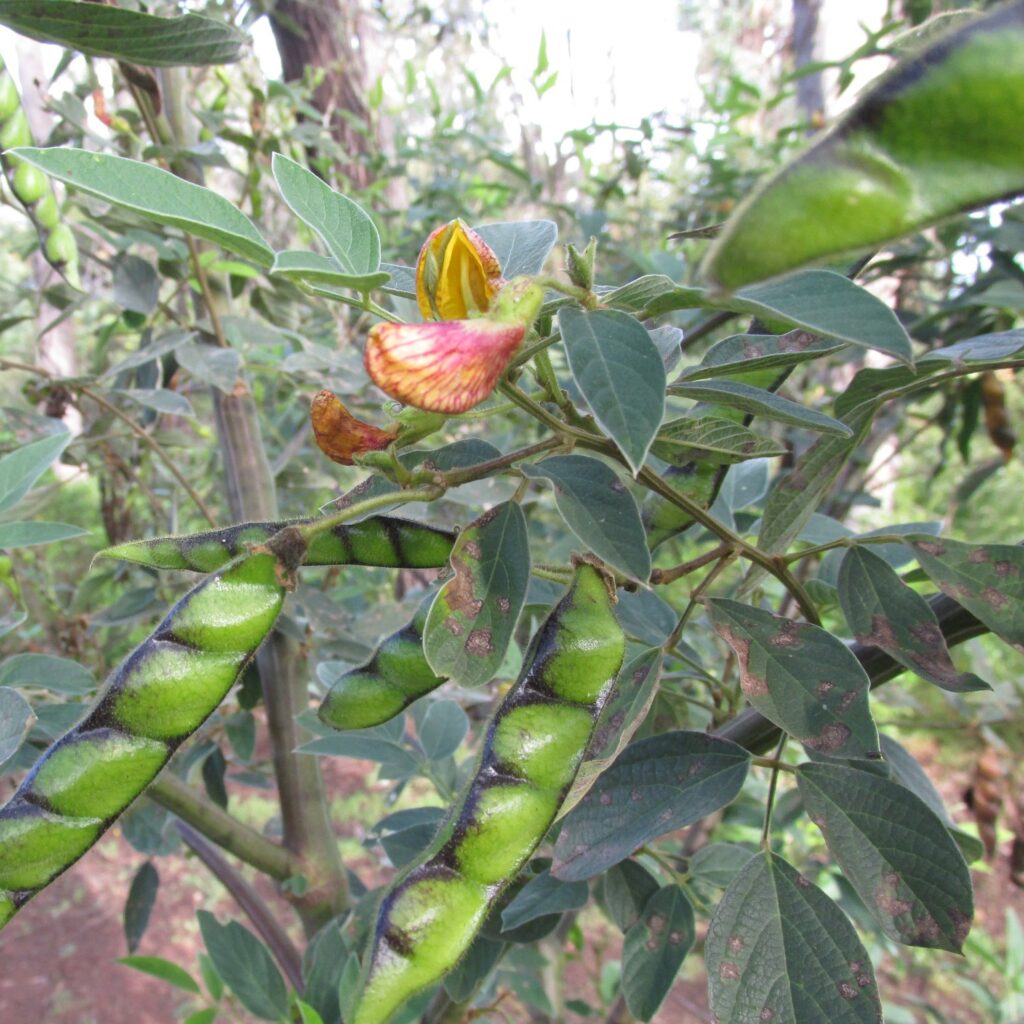
Pigeon Pea (Cajanus cajan)
Pigeon pea is one of the hardest-working plants in a regenerative garden, and the sixth most-common pulse crop in the world. While less common in North America, it’s gaining recognition for good reason: exceptional soil benefits, high nutritional value, and impressive drought tolerance once established.
Why we love it:
- Fixes nitrogen and improves soil fertility (great for compacted soils too)
- Generates abundant biomass: chop and drop to feed the soil
- Provides light shade for young trees and groundcovers
- Drought tolerant once established; just needs consistent moisture for the first 1–2 months
- Great for pollinators (bees love it too!)
Plant photo credit: Forest and Kim Starr
In the garden:
- Grows 6–10 ft tall, 4–6 ft wide when unpruned; plant 3–4 ft apart
- Cut back to 3 ft to encourage bushy regrowth and renewed fruiting (the more you prune, the more it gives)
Food from the same plant — two ways:
- Green (fresh): Shell and cook like edamame, or toss into rice, soups, or stir-fries
- Dry (brown): A shelf-stable staple — the foundation of Indian dal, Caribbean arroz con gandules, and hearty stews worldwide
- Nutritional bonus: ~11g protein, 11g fiber, and ~200 calories per cooked cup
From the garden to your kitchen
We are interested in sharing recipes about the plants we promote! Share your favorite recipes featuring pigeon pea, other agroforestry species like ʻulu, chaya, laupele, ʻuala, or any edible you’re growing at home — and help us build a community recipe collection rooted in Hawaiʻi.
Email us your recipe at info@growgoodhawaii.org
Trees for People: Growing an Urban Community Food & Native Forest
The Trees for People projectʻs goal is to promote agroforestry to backyard growers on the Waiʻanae Coast and in Waimānalo. This project is a collaborative effort with ʻElepaio Social Services, Hoa ʻĀina O Makaha, and Hui Mālama O Ke Kai Foundation. Through the project, we and our partners are distributing 2000 trees to ʻohana interested in growing more food!
2025 was a pivotal year for the project. In February, we planted our first tree at Hui Mālama O Ke Kai Foundation and by December, we planted over 120 trees in Waimānalo! In Waiʻanae, the teams at ʻElepaio Social Services and Hoa ʻĀina O Makaha planted over 100 trees last year! With over 200 trees planted, we are steadily working to plant trees and build gardens throughout Waimānalo and Waiʻanae Coast. If you signed up for a tree from us, please stay on the lookout for a call from our team. Mahalo for your patience.
Here is a recap of all that we accomplished in 2025:
Planted 2 Agroforestry Demonstration Gardens.
These demonstration gardens are located at Waiʻanae Coast Comprehensive Health Center and Hui Mālama O Ke Kai Foundation. The gardens demonstrate the potential of agroforestry, which is to grow more food in less space and with less inputs over time!
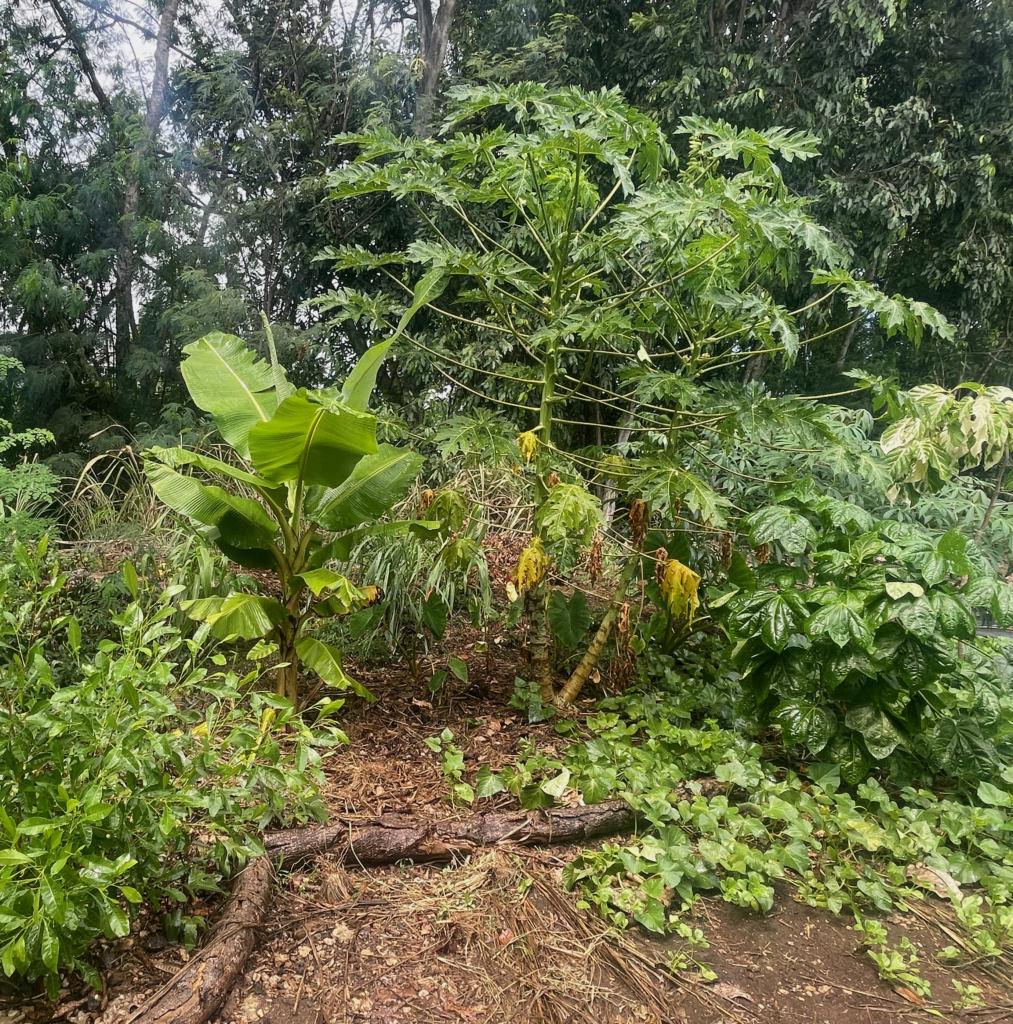
The garden at Hui Mālama O Ke Kai Foundation was planted in early February. It started with a single maiʻa keiki (banana sapling) next to an ʻulu tree and it has grown to be a thriving food forest.
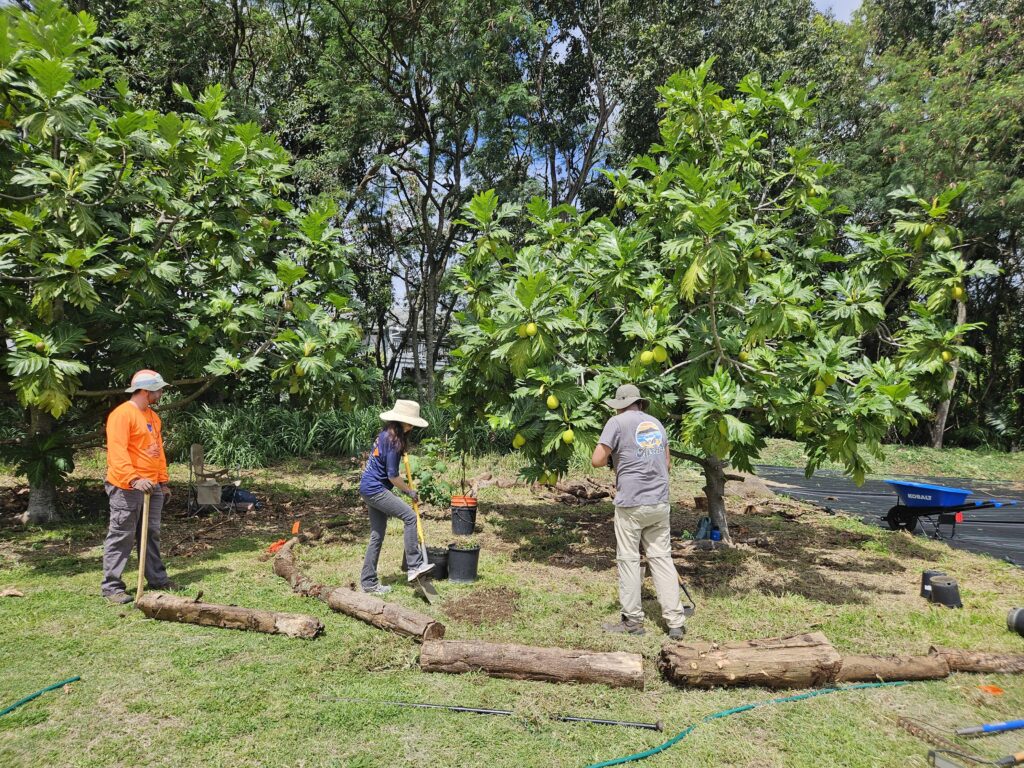
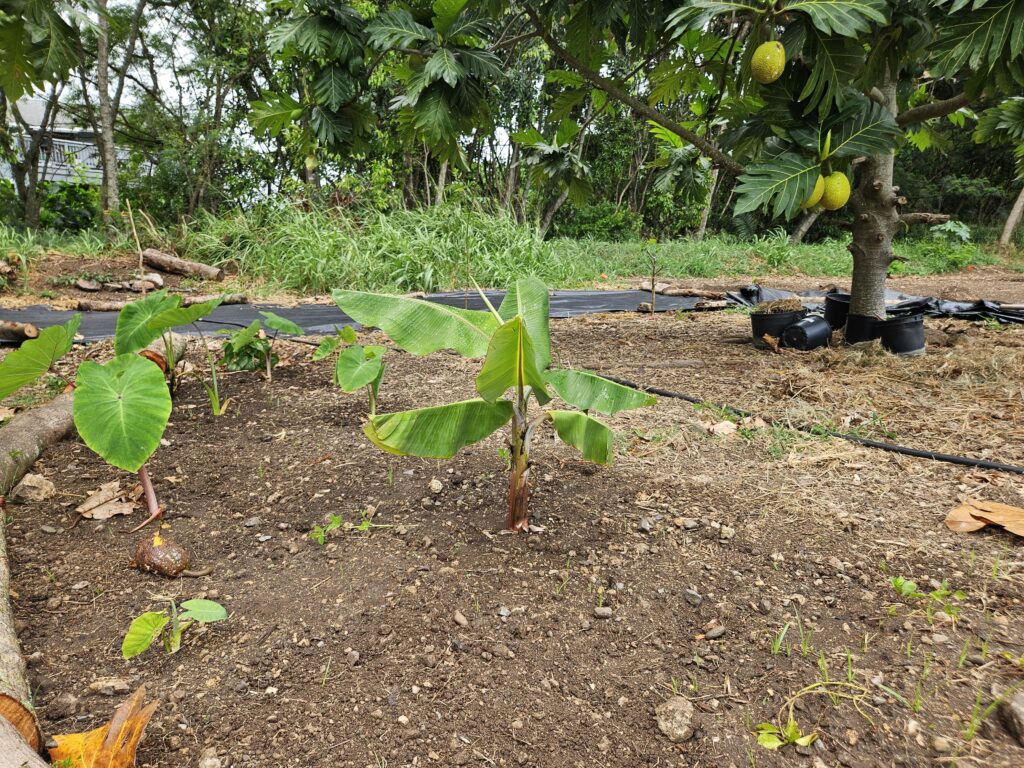
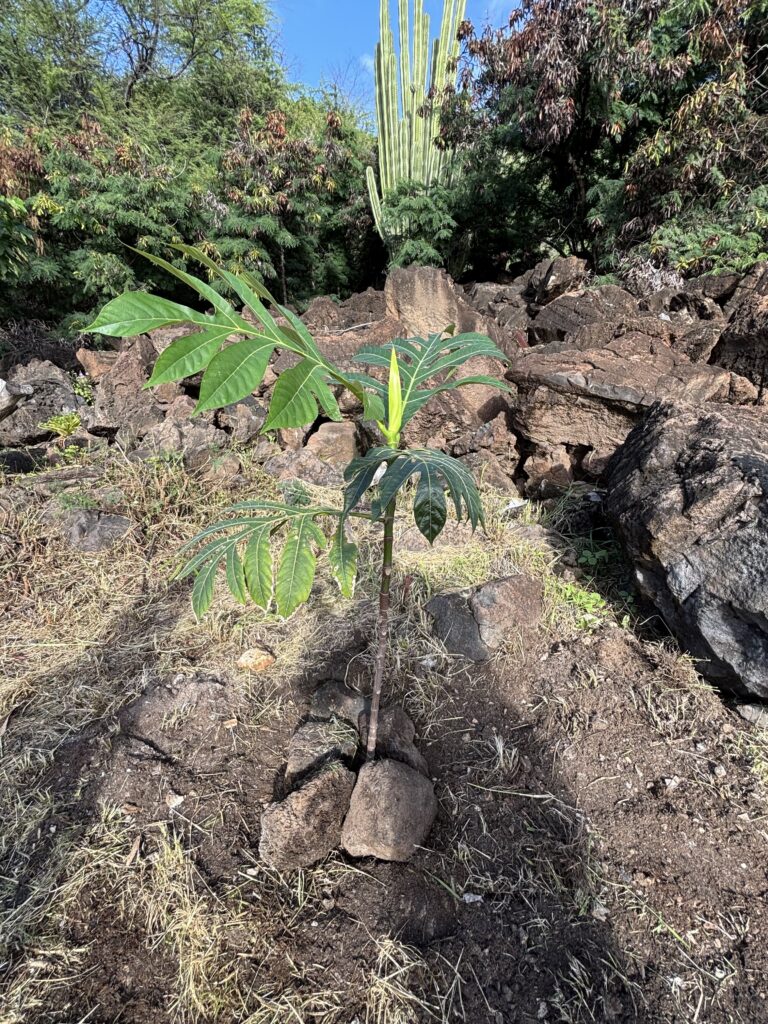
The Grow Good Hawaii team begins scalping the site for planting the first tree!
Thanks to the diligent work of our Agroforestry Technical Manager, Kalani Matsumura, Kealoha Kalama, our workforce development participants, and our workday community members, the garden is slowly beginning to exhibit the meaning of ʻāina momona; an abundant land that can feed people.
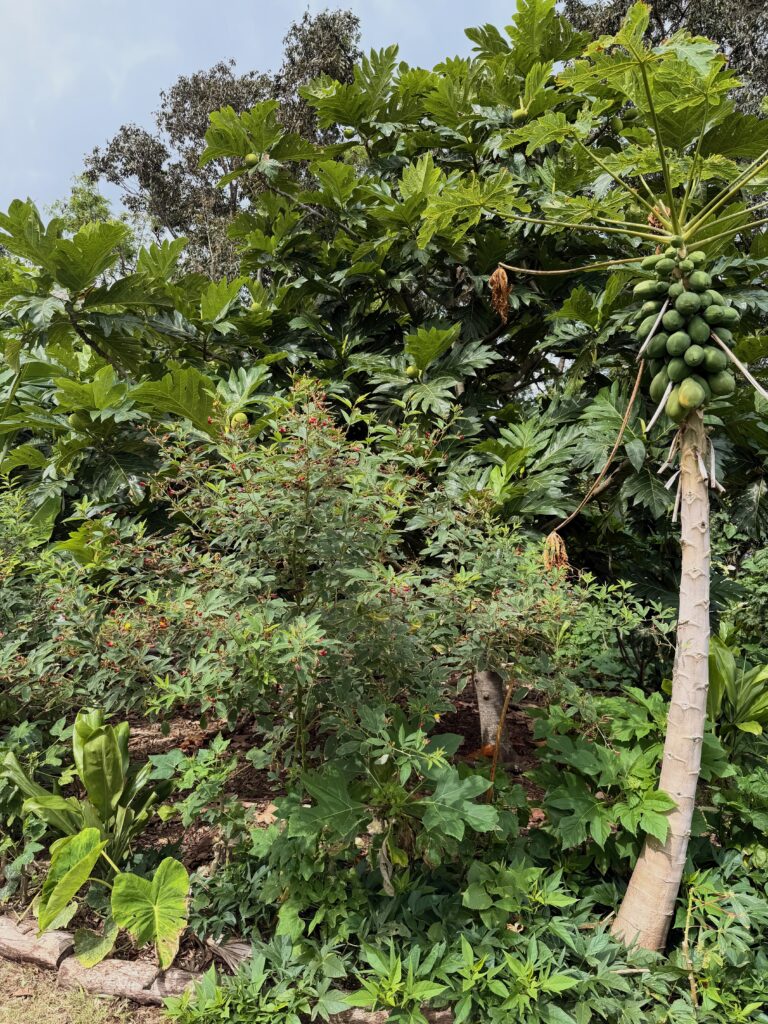
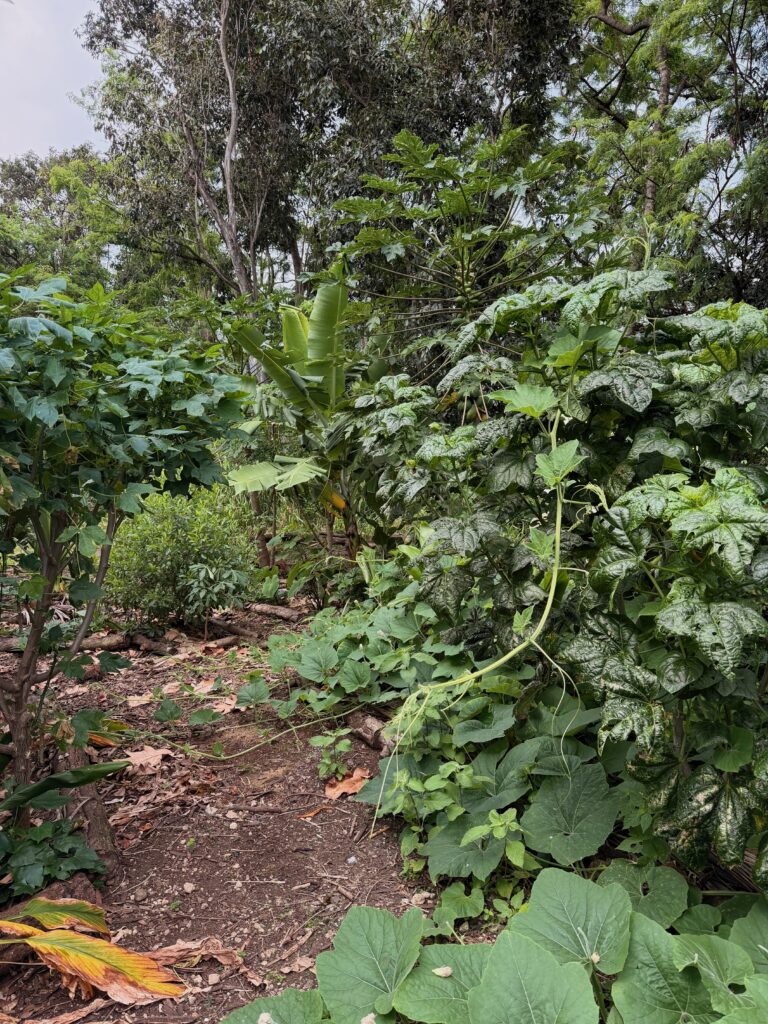
The front side of the garden: a forest full of edible plants (papaya, kalo, ʻulu, gandules, ʻolena, and more)! The back side of the garden: edible plants are growing together to form a food forest (chaya, katuk, laupele, maiʻa, papaya, and more)!
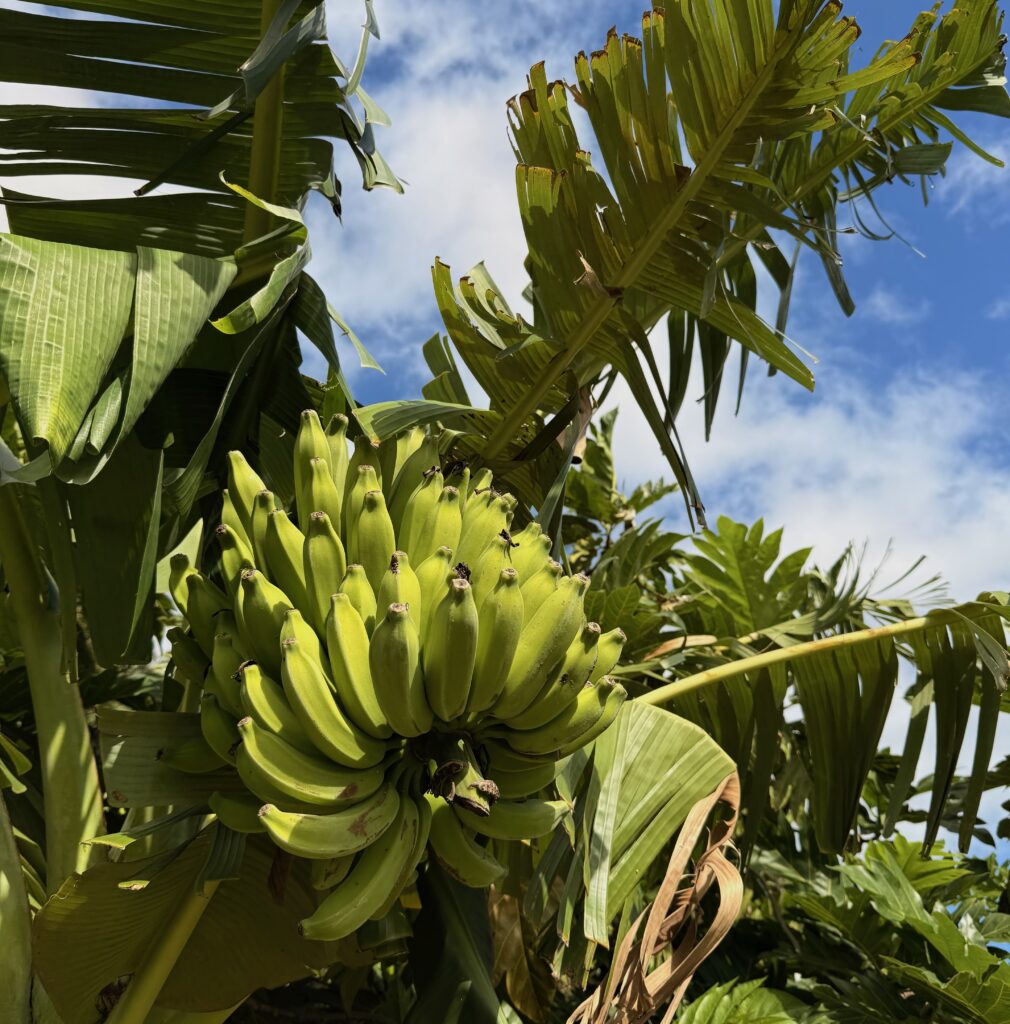
Remember the maiʻa we planted in February? The students at Hui Mālama O Ke Kai Foundation were finally able to pick a healthy bunch to share with their ʻohana. We asked Shalia, the Program Manager at Hui Mālama O Ke Kai Foundation, for her thoughts on seeing the progress of the garden.
Shalia shares: “It is truly inspiring to watch the garden grow from just a few plants to what it is becoming. Seeing the excitement on the faces of our students and ʻohana with their maiʻa from the garden was a highlight for all of us. It really shows what is possible when we laulima (work together) with each other and ʻāina—it is becoming a beautiful example of ʻāina momona.”
The garden at Waiʻanae Coast Comprehensive Health Center is located behind Hale O Palani, and features canoe crops. We asked Jesse, the Food Access Manager at ʻElepaio Social Services and the manager of the demonstration garden at Waiʻanae Coast Comprehensive Health Center, his thoughts on the development of the garden.
He says that the garden provides an alternative spot for people to peep into as they walk the pathways of the health center. People expect to see things they’ve never seen before, and the garden does just that. It’s a food kīpuka; an island of food growing plants. Aside from offering food, the garden also offers the space for community and staff to dream. From bringing in plants from moʻolelo to making lei from the garden, the garden is a space for people to develop their relationship with ʻāina. For example, students and keiki who come to the garden harvest lūʻau leaves to cook at their school. Jesse is excited to see how the garden will develop. He’s dreaming of how the community can malama the space and build a reciprocal relationship with the garden.
Recruited 10 community members to represent the Trees for People project as Ambassador Gardeners.
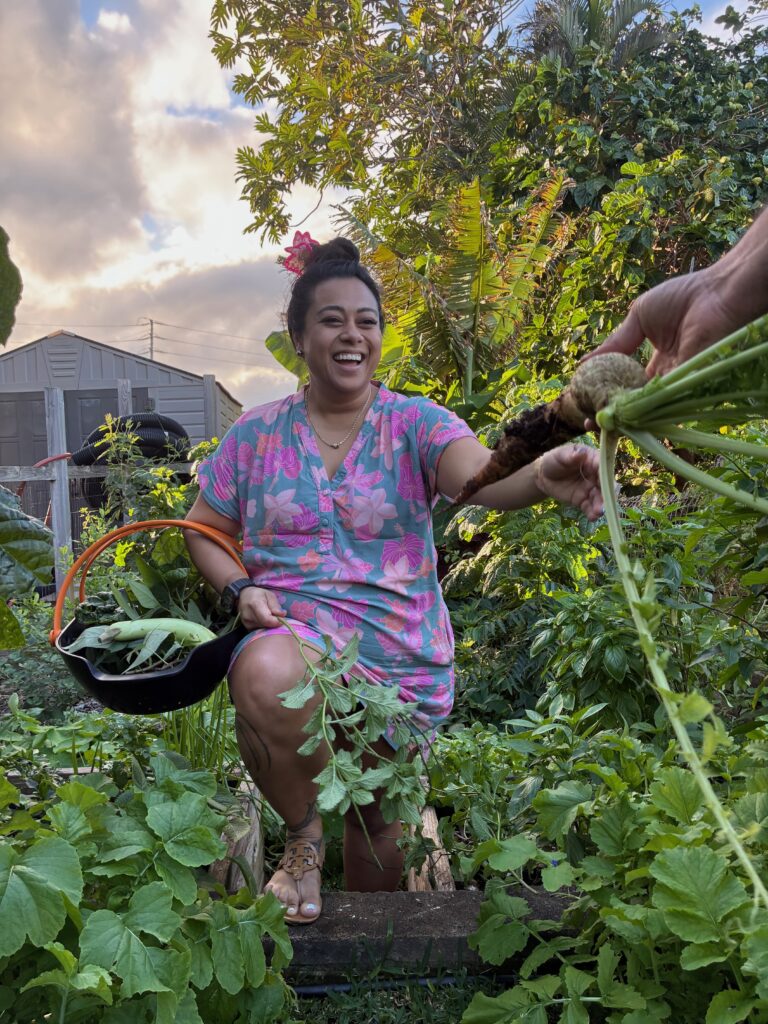
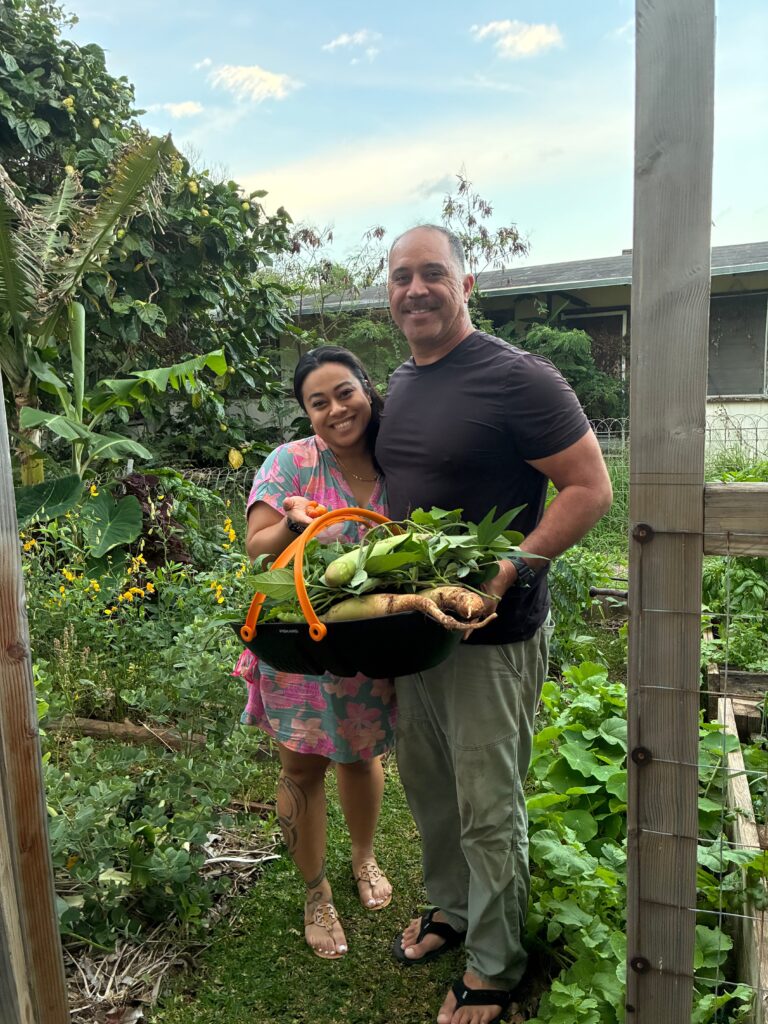
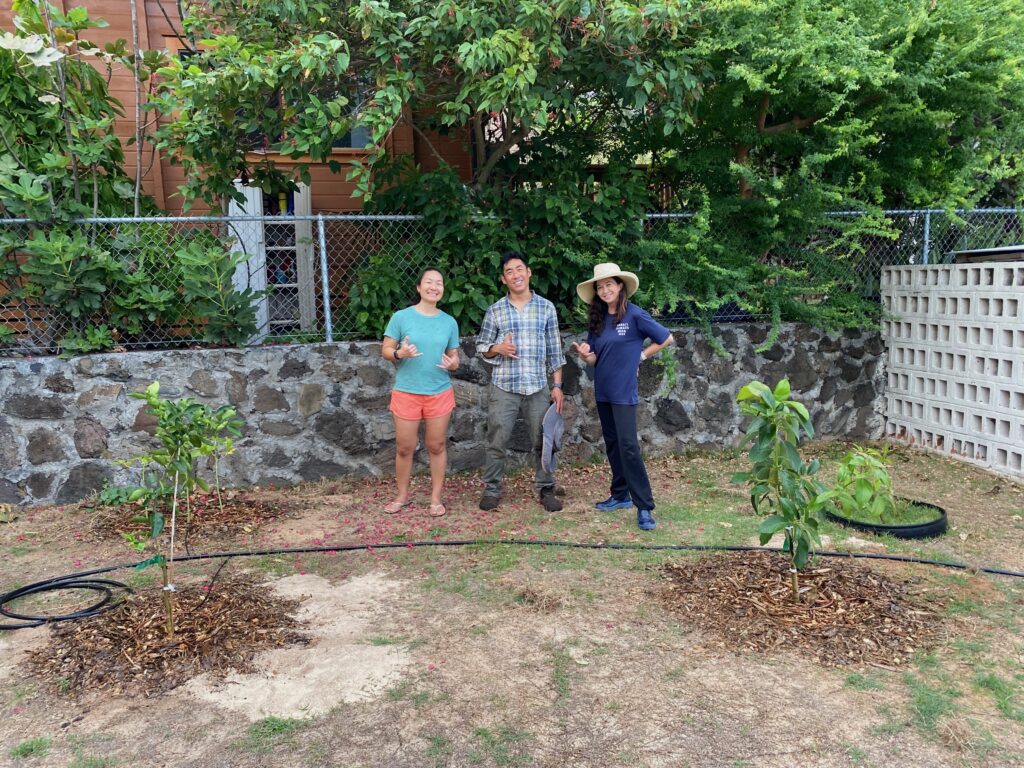
Ambassador Gardeners are community members who believe in the potential backyard agroforestry gardens! We recruited Ambassador Gardeners in both Waiʻanae Coast and Waimānalo, installed mini demonstration gardens at their homes or community spaces, and asked them to share their gardens with their communities. It has been so beautiful to see their gardens transform along with the demonstration gardens.
We asked two of our Ambassador Gardeners, Kauilani who lives in Waimānalo and Wallace who lives on the Waiʻanae Coast, on their thoughts about the garden. Here is what they had to say.
Why did you want to bring a garden into your space or community?
Kauilani: “I’ve been wanting to grow food for a long time. I love keeping my hands busy. I’ve watched my grandparents grow flowers and fruits like mango, papaya, mountain apple and I remember enjoying those growing up. As they got older their plants went neglected and we didn’t pick up that responsibility so many of them died or were cut down/ removed. As an adult, I wanted to bring that back into my life. I think of them when I’m in my garden now. It’s a happy way to connect with them.”
Wallace: “My ‘ohana and I wanted to bring a garden into our space to be able to grow more homegrown organic vegetables, fruits, and herbs for our ohana,and friends.”
How have your ʻohana, friends, or neighbors responded to the garden?
Kauilani: “My husband and I are in the garden almost every Sunday to chop and drop. We enjoy our time together in garden. It’s been a blessing to share space and quality time. The food we are able to put on the table been a blessing but the connection it has brought to my family is the greatest take away from this experience.”
“Our family and friends are blown away by the quick transformation of our yard. It was once just grass we were trying to keep alive and now it’s this living thing that has color and fruit. We love sharing some of our produce. It’s nice to cook meals and share them. People always get excited when we say that an item or two in the dish was grown by us.”
Wallace: “Our ʻohana loves having a garden area where we are and growing vegetables such as cucumbers, tomatoes, eggplants, herbs, etc. Its been great for our keiki too. The garden is a space for them to grow whatever they want, engage with the soil, and watch plants grow. They have planted wild flowers and corn. With all these food crops in the garden, Its been special being able to share our harvests with our ʻohana and friends.
What would you tell someone who is thinking about starting their own garden?
Kauilani: “I would tell them to do it intentionally. I would tell them that it’s a responsibility but it will give you more than you put in. Everyone should have a garden. It gives and it teaches and it is ultimately a reflection of your time and care.”
Wallace: “Just do it and trust the process! Watching your hard work turn into food is rewarding in the end.”
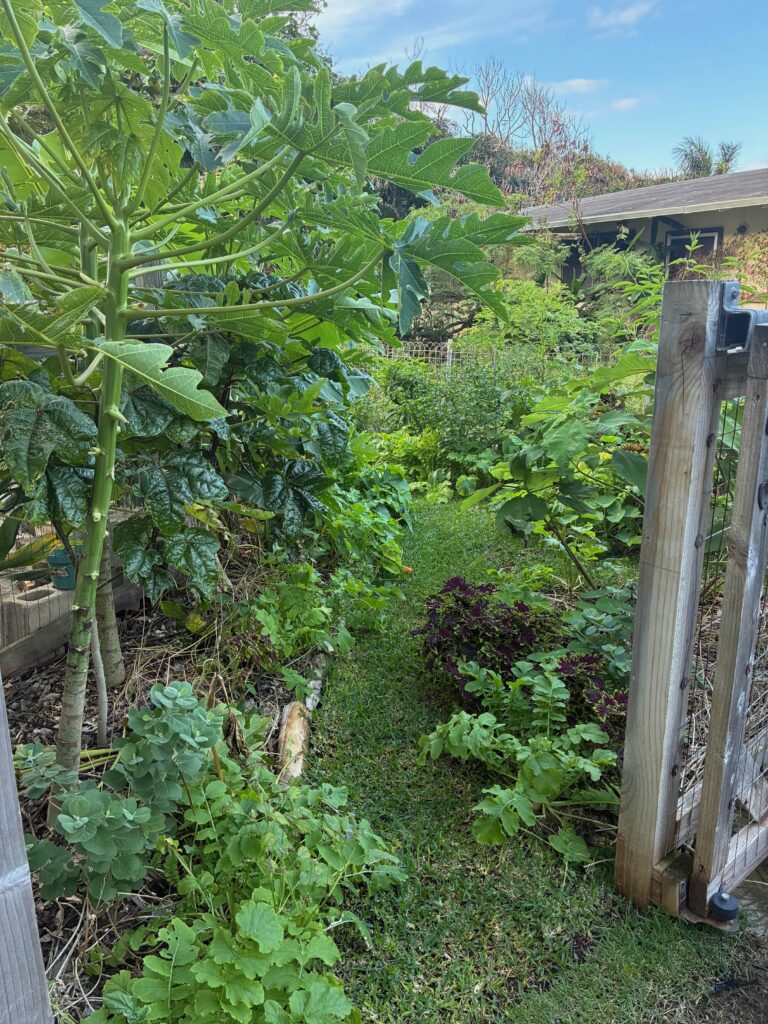
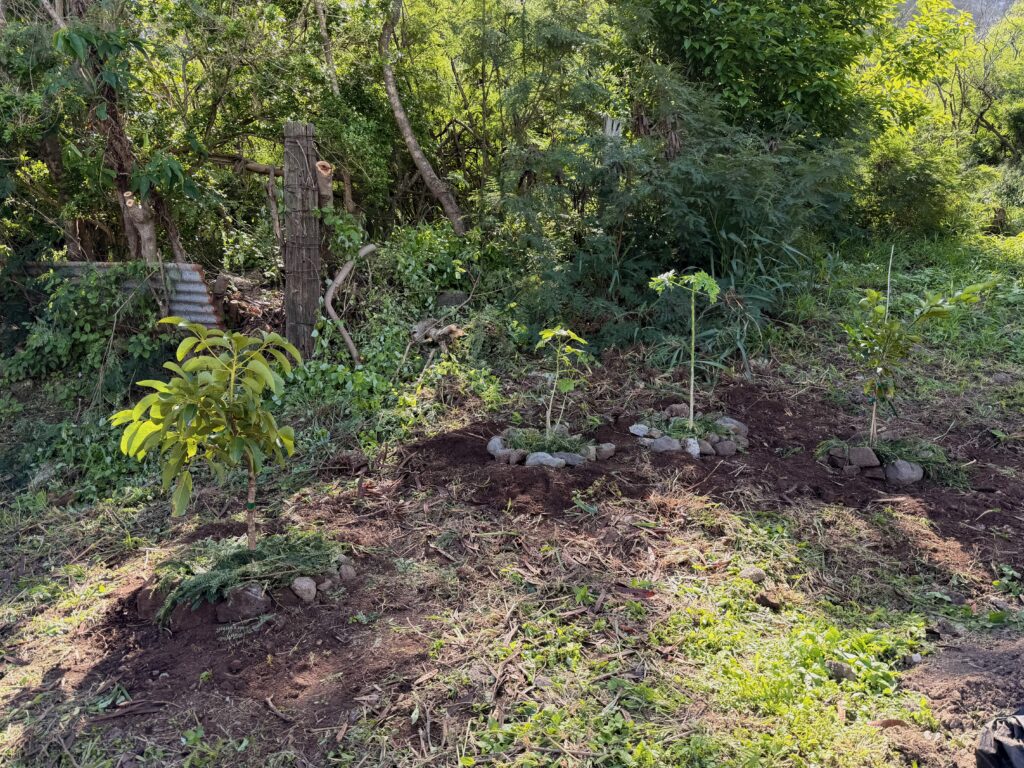
Kauilani’s agroforest
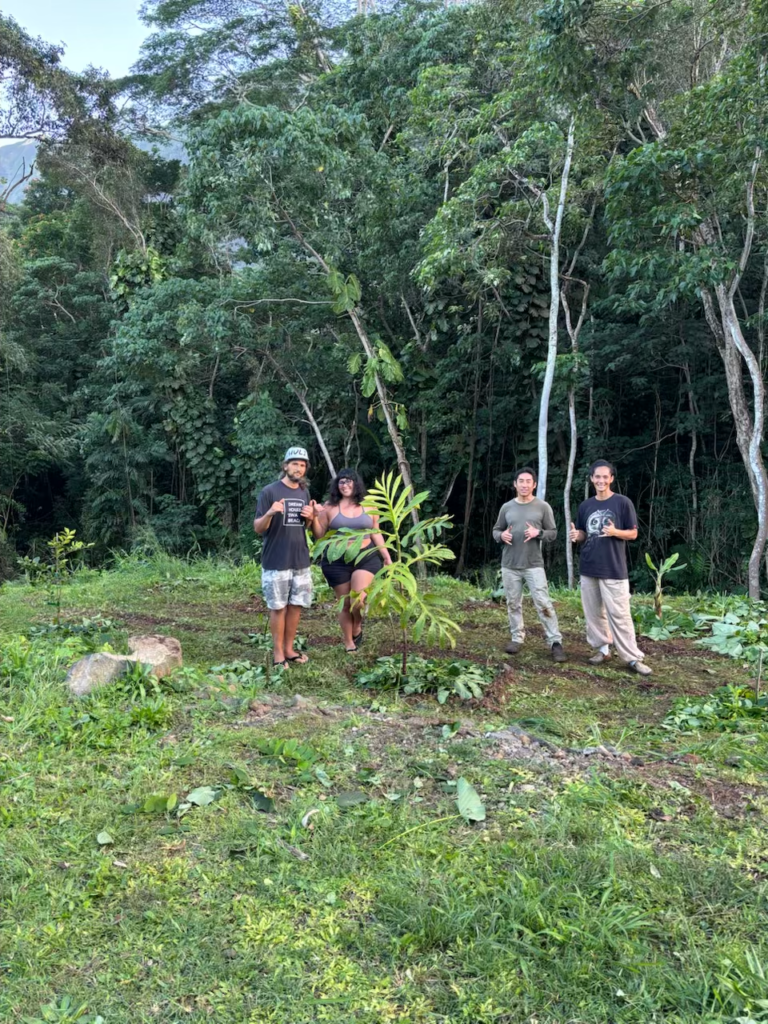
Distributed trees to over 60 ʻohana.
In June 2025, we promoted the project to the public. We shared that community members on the Waiʻanae Coast and in Waimānalo could sign up to get a tree and agroforestry garden from Grow Good Hawaii or our partners. We received over 500 sign ups! People shared our enthusiasm for agroforestry and we were excited to share our vision with them!
If you signed up for a tree from us, mahalo nui for your enthusiasm! We are getting to each person who signed up as quickly as we can; but it will take some time! Please be on the lookout for a call, voicemail, or text from Grow Good Hawaii or its partners.
Our approach to distribution is methodical:
- We call every person to learn more about them, their garden, and their needs.
- We offer one-to-one support to plant your tree with you.
- We offer irrigation and other plant care materials to those who want and need them.
We do this because we want every person to have a positive experience with their tree and garden! Our goal is to build a network of backyard agroforests, and that takes a lot of care on our part. We appreciate your patience.
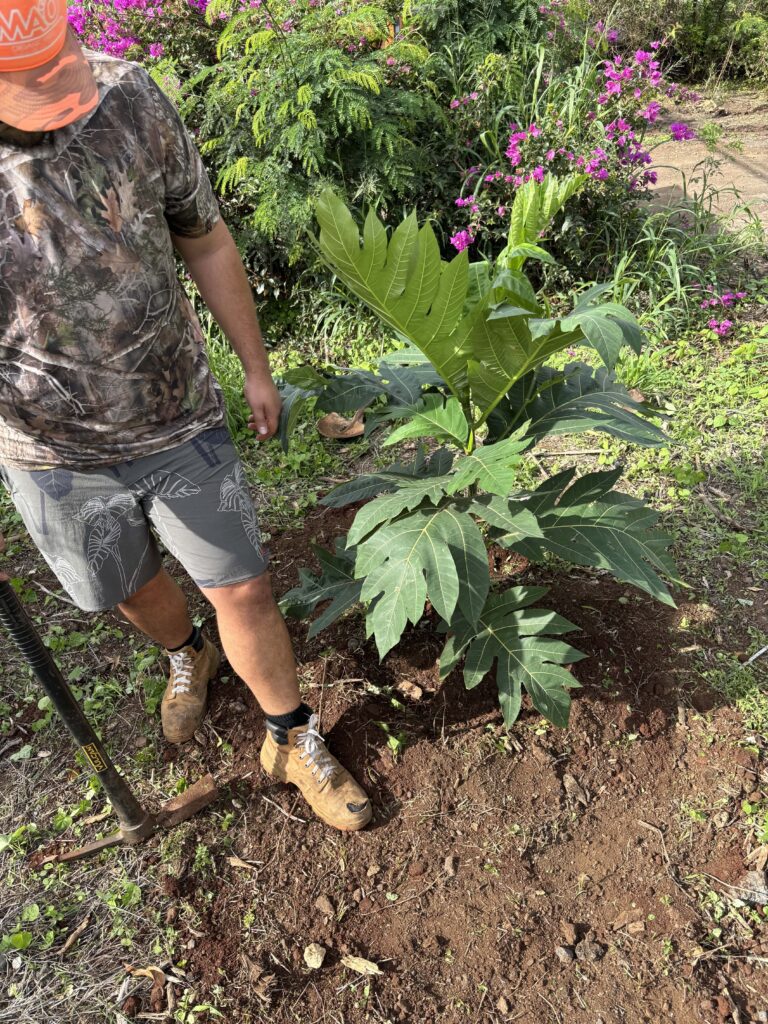
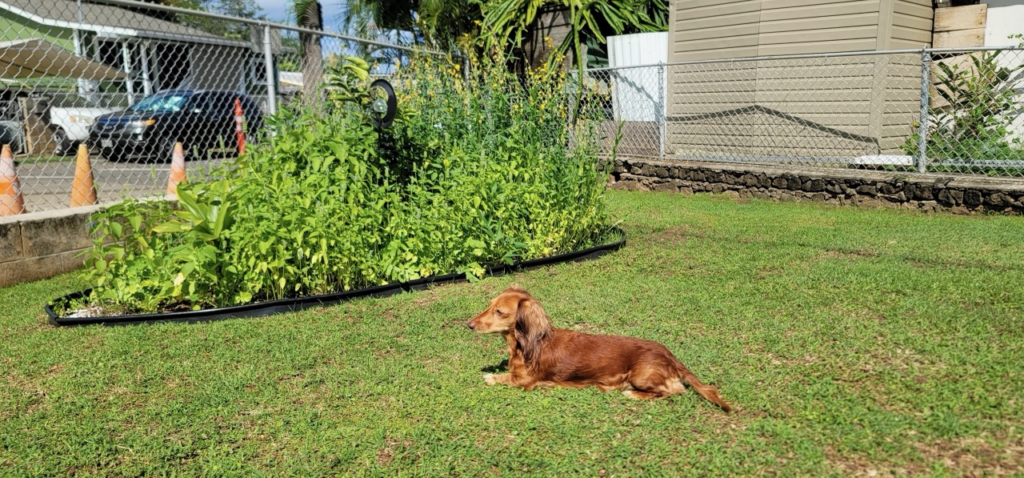
Here is just a quick peek into what our participants are receiving:
Go Native: Growing a Native Hawaiian Urban Forest
Backyard Conservation: Growing a Movement
What can one backyard do for conservation? On its own, perhaps not much. But when many households take small actions across a neighborhood or region, the collective impact can be enormous. Across the continental U.S., for example, widespread planting of milkweed has helped support monarch butterflies. Grow Good Hawaiʻi is exploring how a similar community movement could support native Hawaiian species.
Thanks to Worcester Polytechnic Institute (WPI) and their Hawaiʻi liaison, Pam Hinsdale, Grow Good Hawaiʻi partnered with two student teams to explore how a Backyard Conservation movement could take shape. The students were part of WPI’s distinctive 8-week inquiry projects, designed to bridge the sciences and humanities by applying academic learning to real-world challenges.
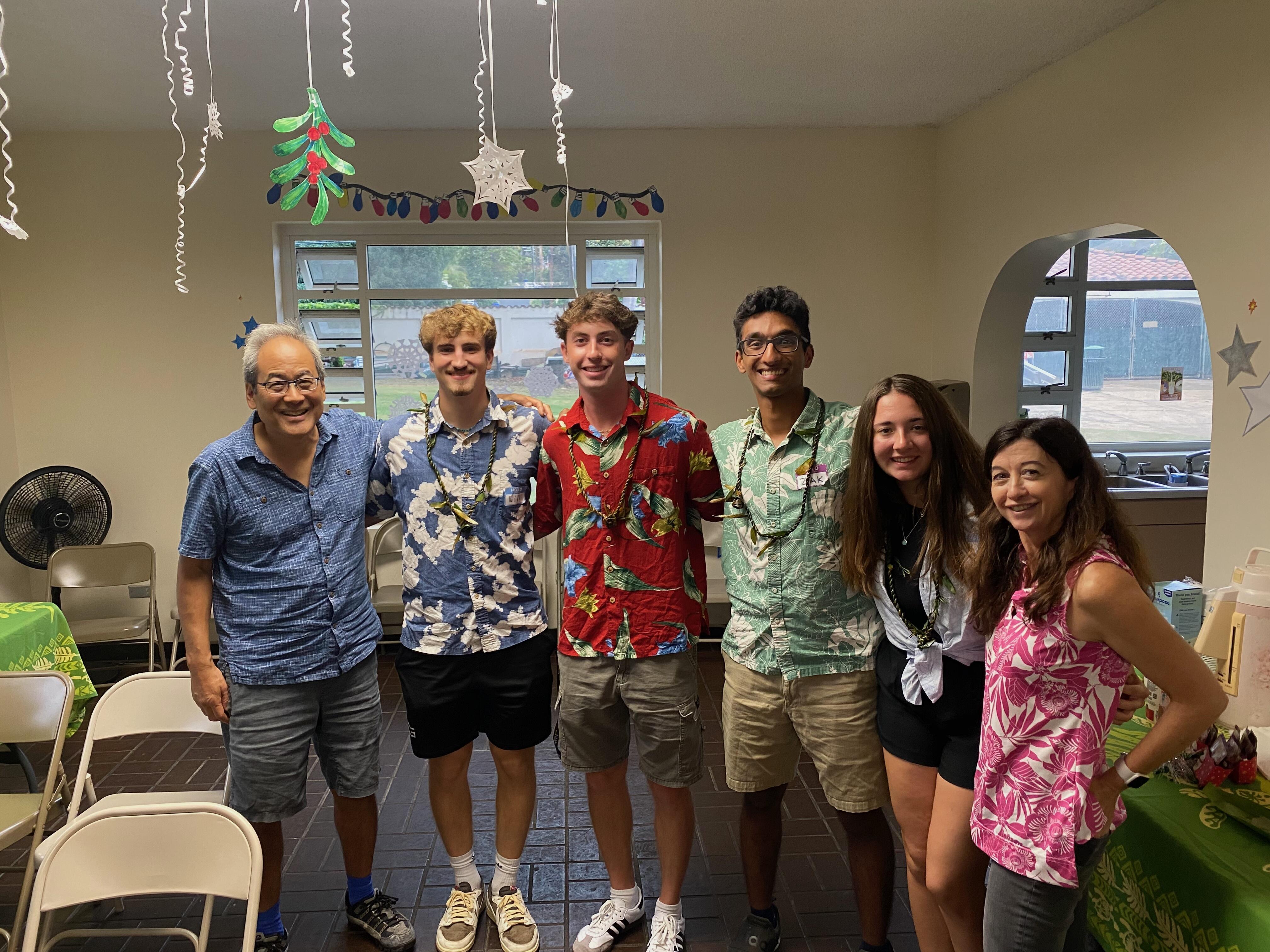
The first team, which included Savannah Curtis, Dylan Miller, William Hill, and Zak Lodi, evaluated a range of plant–animal combinations to identify a native plant that could realistically be grown in residential landscapes while supporting native wildlife. With consultation with entomology specialists, including Dr. Will Haines, the group centered their project on ʻāʻaliʻi (Dodonaea viscosa).
ʻĀʻaliʻi turns out to be an excellent candidate for a backyard conservation effort. The hardy native shrub is adaptable, drought tolerant, and relatively easy for gardeners to grow. It can support multiple native species, including the koa butterfly (Udara blackburni), the koa bug (Coleotichus blackburniae), the ʻamakihi (Chlorodrepanis virens), as well as the Kamehameha butterfly. Beyond its ecological value, ʻāʻaliʻi also carries cultural significance in Hawaiʻi. Its name evokes resilience and the ability to withstand harsh conditions, and the plant has long been used in lei making. It is also increasingly recommended in fire-wise landscaping.
In addition to identifying the plant focus, the first team also explored which communities might be strong starting points for launching the effort.
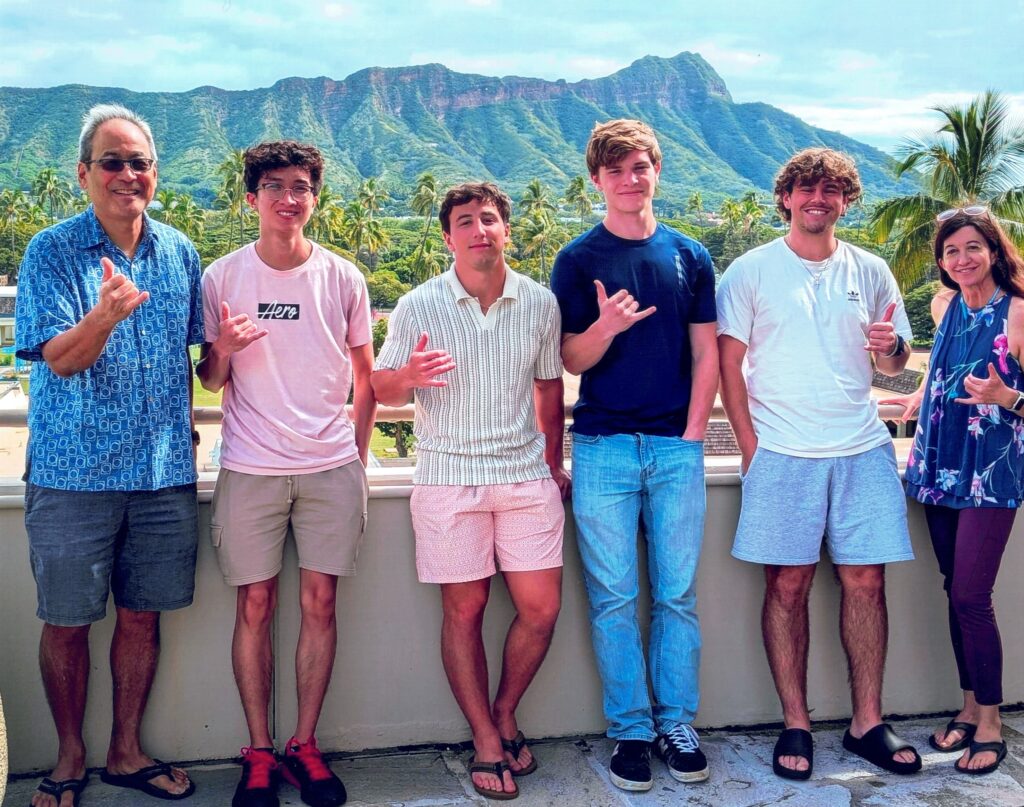
The second team, Joshua Bearfield, Maxwell Jeronimo, Noah Mariano, and Luca Ursini, then built on this foundation by exploring how such a movement could spread. Their work included developing educational materials, outreach strategies, mapping tools to track participation, and refining ideas for how communities could organize around the effort.
One key insight that emerged was the importance of local leadership. Each participating area benefits from both a Neighborhood Champion and a Nursery Champion. Neighborhood Champions help encourage participation and connect neighbors with resources, while Nursery Champions help propagate and distribute plants locally.
In Kuliʻouʻou, Sandra Correa offers a wonderful example of what a Neighborhood Champion and Nursery Champion can look like in practice, serving as both a neighborhood connector and a grower of native plants (see this newsletter for more on Sandra’s efforts).
Backyard Conservation is ultimately about many small actions adding up to something much larger — and we’re excited to see where this movement grows.
A heartfelt mahalo to all of the WPI students who contributed to this work, and to their faculty advisors Zoe Eddy and Jed Lindholm (first term) and Rick Vaz and Chrys Demetri (second term) for guiding the projects.
And a special thank you to Sandra Correa, whose leadership and generosity provide a powerful model for what a Backyard Conservation movement can become.
If you love native plants and would be interested in serving as a Neighborhood Champion or Nursery Champion in your community, we’d love to hear from you! Several communities are already being explored as potential starting points.
Please email us at info@growgoodhawaii.org!
Puʻuhonua: Distributed, Scalable Phytoremediation of the Ala Wai Watershed Using Native Hawaiian Plants
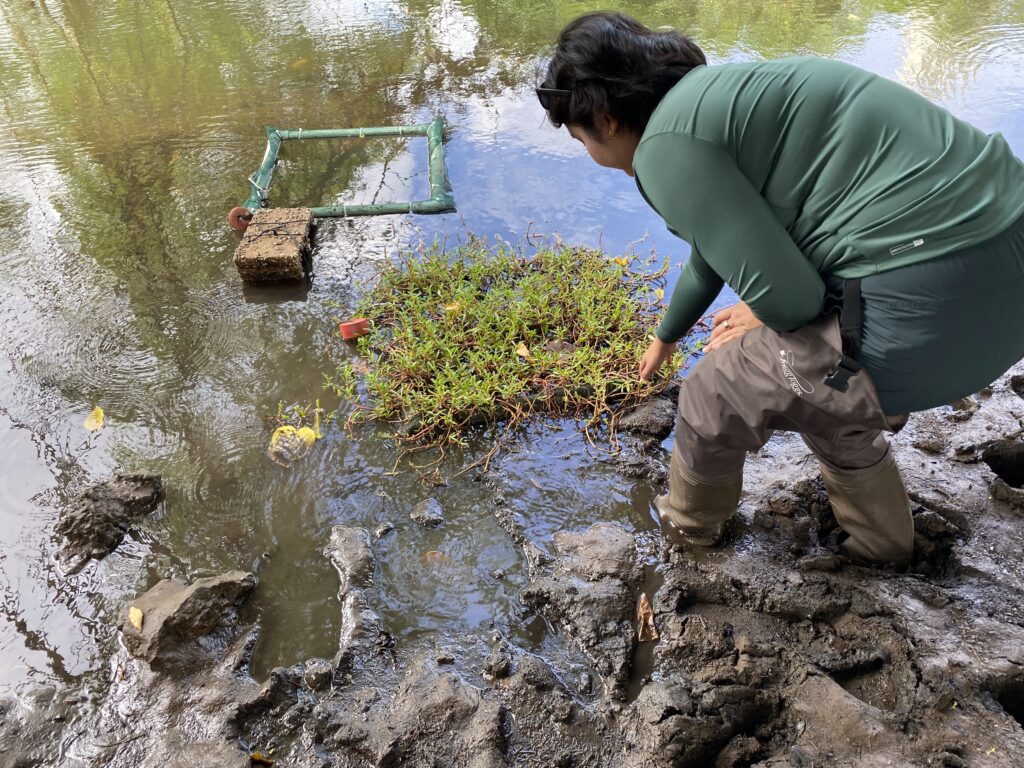
The project team for Pu‘uhonua: Distributed, Scalable Phytoremediation of the Ala Wai Watershed Using Native Hawaiian Plants recently launched four pu‘uhonua (floating rafts of ‘ākulikuli) at the project site in the Ala Wai Canal near ‘Iolani School. We are testing different configurations of the raft construction to determine which is most effective.
A major problem we have encountered is die back of the ‘ākulikuli. Different causes of this are being investigated. One concern is that ducks may be devouring the plants, so we have installed a wildlife monitoring camera this time on a nearby tree. Meanwhile, during a recent site visit to collect data and check the condition of the rafts, we noticed a flock of ducks gorging themselves on the ‘ākulikuli, jumping on the rafts, and waddling through the plant growth. The configuration that has netting was largely immune to the ducks’ snacking on ‘ākulikuli. Lesson: there’s nothing better than good old kilo (observation) to find answers. Other potential causes of plant dieback are the media in which the plants are grown as well as the degree to which they are submerged in the water (a potential cause of root rot). Hopefully, we will get firm answers and clear this major remaining hurdle to the project’s success.
In a parallel effort, we plan to test the efficacy of ‘ākulikuli in removing certain heavy metals by running a laboratory experiment. Isabella Ah Moo, a 2025 graduate of Pomona College in Biology and Asian American Studies, joined the team last fall and has been an enormous help in coordinating the project and documenting testing protocols and results. The two ‘Iolani students who have worked intensively on the project, Christopher Aguillon and Oliver Physioc-Fox, are graduating this year and recently presented the results of their honors independent research at ‘Iolani’s Spring Science Symposium 2026: “Use of Constructed Floating Wetlands for Phytoremediation and Native Wildlife Recruitment Using Native Hawaiian Plants.”
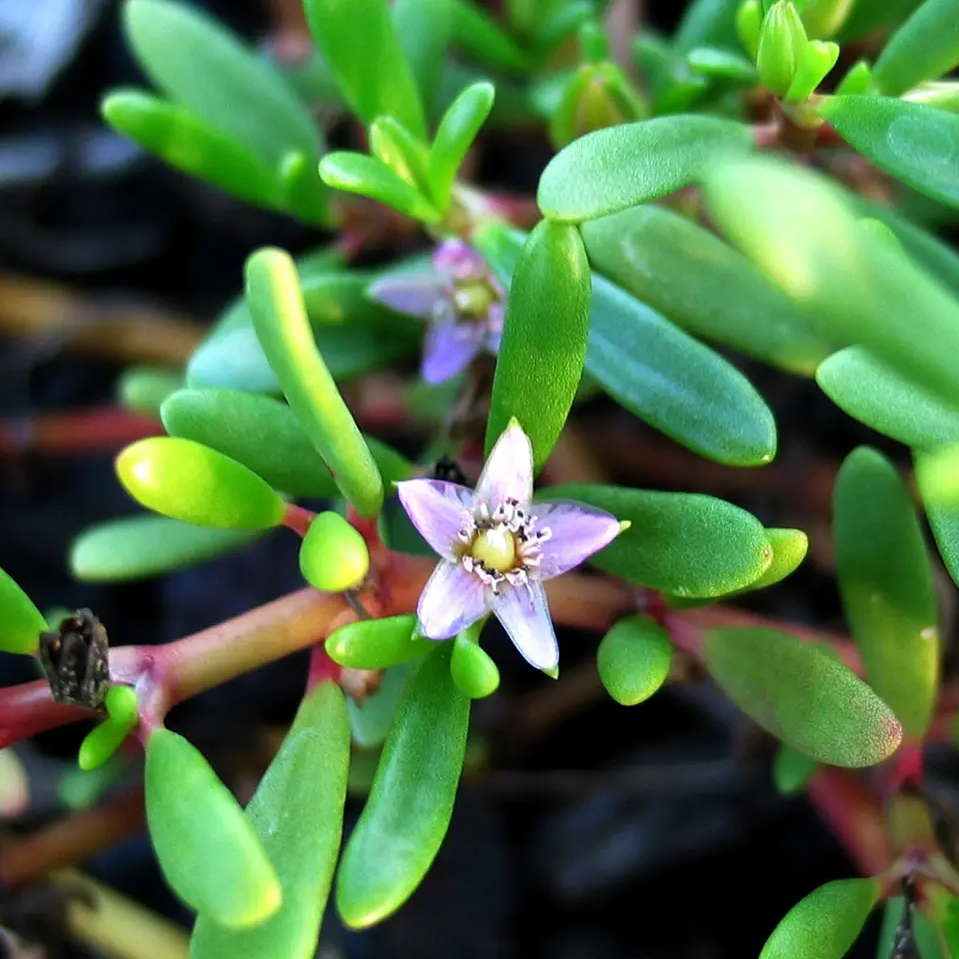
Plant photo credit: David Eickhoff
Learning about Regenerative Agriculture with Mama Food Forest
Mama Food Forest is dedicated to educating and empowering communities through regenerative practices that support food and nutrition security while enhancing environmental and human health and well-being.
In February 2026, Grow Good Hawaii, Dr. Craig Elevitch and his haumāna at Mama Food Forest hosted a 3-day workshop at Hui Mālama O Ke Kai Foundation. The workshop introduced ʻohana throughout the island of Oʻahu to regeneration, principles & practices to transform their approach to growing food. The goals of the workshop were to:
- Introduce food forest design, planning & kilo (observation) skill building that can be applied to any site
- Teach how to optimize plant health and productivity through plant selection, spacing, maintenance, and replanting
- Offer hands-on experience with site preparation and food forest installation using primarily on-site resources
- Offer community sharing of space, time, insights and reflections, leaving with an increased awareness of living in harmony with the natural world
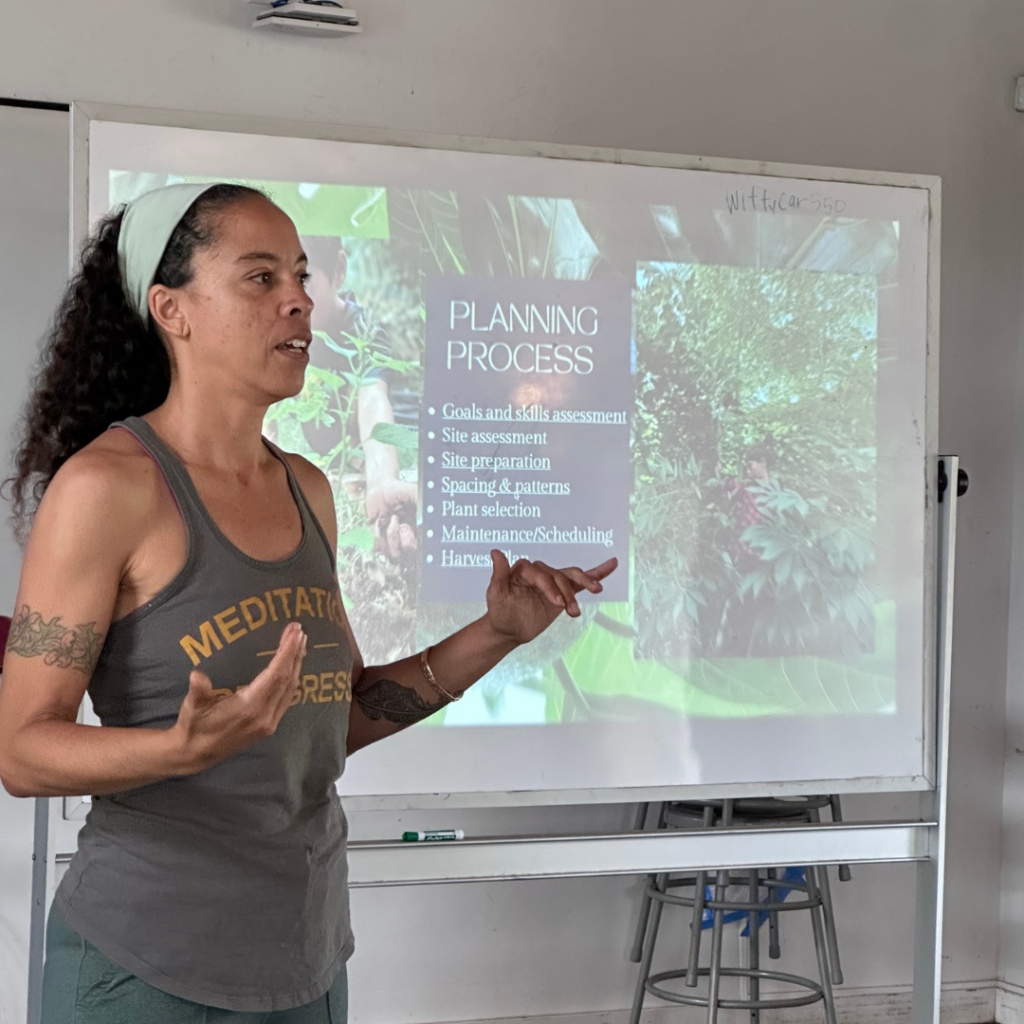
In April 2026, Mama Food Forest gave a similar workshop to our ʻĀina Momona workshop community. This workshop shared similar teachings, but focused on regeneration after the Kona Low storms.
We asked the Mama Food Forest team their thoughts about hosting these workshops:
What inspired you to host this food forest workshop?
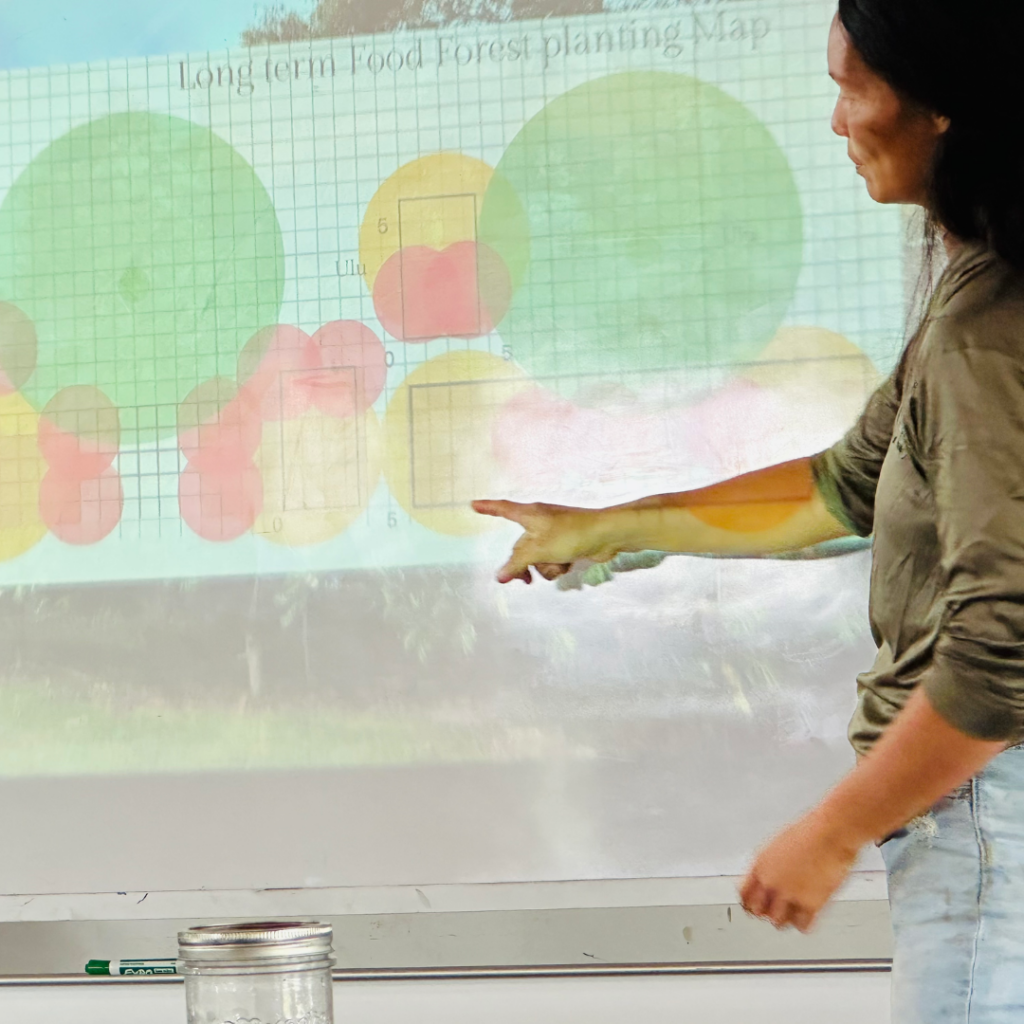
Kuleana, the responsibility and privilege to share the ancestral ‘ike of indigenous agroforestry inspires us to host these regenerative workshops. We all have experienced the food forest magic of gathering and connecting people to place and each other within the community. It’s simple and powerful to gather – regenerating ‘āina, expanding ecosystem diversification, and empowering peoples’ capability in themselves, in their backyards and community spaces, and how to grow alongside the cultivation of their own food. We want to share this practice to as many ʻohana across Kō Hawaiʻi Pae ʻĀina as possible.
Why is it important to share food forest knowledge with ʻohana across Oʻahu?
Food sovereignty and health for our island ʻohana is of utmost importance. It is a gift to have access to clean, fresh, safe and secure food that acts as medicine. Consuming nourishing food, grown without chemicals, with regenerative land stewardship practices and in nature’s rhythm, optimizes the health of our ʻohana and ‘āina simultaneously. A network of well nourished communities and well cared for land reverberates healing, harmony and abundance for generations.
What changes have you seen in participants or communities after attending past workshops?
It truly is a transformative gathering and learning journey that opens the heart and mind. Individuals and families, multi-generational and multicultural, people of all backgrounds have been part of mama food forest spaces.Here are a few participant comments:
“To visually see the potential of our future Hawai’i struck my pu’uwai in a way that I cannot explain. The deep breath I take now knowing that our keiki can always have ‘ai is so sweet. Kumu Craig and the MMFF māmās have given me real, rooted hope for our future ‘āina and lāhui.” – Participant #1
“It reignited my passion for growing food and taking care of the land in a pono way.” – Participant #2
“I have learned so much about regeneration and the possibility of having a healthy food forest. I also learned much about myself and the importance of taking care of myself as a mother.” – Participant #3
“Interest in a food forest not just as a source of food, but as our important connection to earth and our codependence.” – Participant #4
Upcoming 3-day regenerative food forest installation workshop at Hui Mālama O Ke Kai
Mama Food Forest is continuing their connection with Waimānalo community at Hui Mālama O Ke Kai’s food forest, and they plan for future offerings on Oʻahu and Island of Hawaiʻi in the near future. Please join them over the summer at the next immersive gatherings for a 3-day regenerative food forest installation workshop. Stay tuned for more information & save the dates:
- July 31-August 2, 2026
- Friday 4 PM -7 PM, Sat & Sun 9 AM – 4 PM
Affordability: It’s a kako’o thing
Grow Good Hawaii executive director Paul Arinaga recently participated as a panelist in KĀKOU: Hawaii’s Town Hall, a PBS program that invites members of the community to come together to share their views on specific topics. The topic of this episode of KĀKOU was affordability. In addition to learning from and enjoying hearing the views of the other participants, Paul was able to share his views on affordability, particularly regarding food self-sufficiency and food sovereignty. Paul’s mention of the Mea‘ai Sharing Platform particularly seemed to attract a great deal of positive interest from the other participants, show hostess Yunji de Nies, and the program’s viewers. Watch “Creating a Hawaii we can afford.”
Beauty, Food, and Ecology: A New Vision for Urban Landscapes
Grow Good Hawaiʻi was honored to be invited as guest lecturers in the University of Hawaiʻi at Mānoa’s graduate course ARCH 682 / PLAN 682: Building Well-Being: Health and the Built Environment, taught by Carol Diener Weber.
The talk asked a provocative question: Why do we treat beauty, food production, and ecology as separate in our landscapes?
In most cities, ornamental gardens are designed for aesthetics, agriculture produces food somewhere else, and conservation happens “out there” in protected areas. This separation has quietly shaped our built environment for generations—and left us with landscapes that are often beautiful, but ecologically impoverished.
What if the places where we live could do more?
Residential landscapes collectively make up one of the largest land-use systems in cities. If designed intentionally, they could function as distributed ecological infrastructure—a network of small habitat patches that support birds, insects, soil life, and local food production.
Conservation biologist Doug Tallamy has framed this idea simply: What if conservation wasn’t something we did somewhere else, but right here in our own backyards?
In that vision, every yard becomes part of a living system—small food forests and habitat patches that collectively create a resilient urban ecosystem. Imagine Honolulu not as a forest scattered within a city, but a city nestled within a forest.
Caption: Grow Good Hawaii’s work is based on the concept of Biodiversity Islands (kipuka) or Applied Nucleation. The idea is to create patches of green throughout urban areas. These can be food forests, native forests, or mixed forests. Collectively, these can form an urban forest that produces food, shade, and enjoyment for people; habitat and food for native animals; preserves genetic diversity; and restores nature from mauka to makai. Our strategy is to help individual ‘ohana (“residential”) as well as civic groups and businesses (“institutional”), and to also focus on streams and estuaries (“riparian restoration”).

The session explored how regenerative agroforestry design can help bring that vision to life. By layering trees, shrubs, and ground covers, even small spaces can produce abundant food while supporting biodiversity and building healthy soil.
Design also matters. Many of the attributes that make ecological systems resilient—dense vegetation, irregular spatial structure, and high species diversity—can easily be perceived as “messy” in conventional landscapes. The talk explored how design tools can create legibility, cohesion, and intention within that complexity. Drawing on classic landscape design principles—unity, balance, repetition, and rhythm—elements such as structured edges, clear paths, and recurring plant groupings help organize diverse plantings so they read as intentional rather than neglected. Insights from prospect–refuge theory also suggest that landscapes feel most comfortable when they combine open views with sheltered spaces. The challenge, ultimately, is not choosing between beauty and ecology—the challenge is designing beauty within ecological complexity.
These landscapes can also be surprisingly productive. By thinking in three dimensions and stacking plants vertically, a yard can host a diverse ecosystem of trees, shrubs, and ground covers that produces fresh food while supporting biodiversity. Many plants tolerate more shade than we expect, allowing edible and native species to be integrated together in dense plantings.
History offers a powerful reminder of this potential. During World War II, Victory Gardens produced an estimated 40% of the fresh vegetables consumed in the United States. Today, re-imagining residential landscapes as productive ecosystems could again play an important role in strengthening local food systems and community resilience.
Including nutrient-cycling “chop-and-drop” plants—species that are periodically pruned and returned to the soil as mulch—helps create a closed-loop system that gradually builds soil fertility. Over time, landscapes become more resilient and require fewer external inputs.
The larger message was simple: the future of biodiversity and human well-being will be shaped not only in wilderness areas, but in the everyday landscapes where people live.
At Grow Good Hawaiʻi, we are actively exploring how to integrate beauty, food production, and ecological function in residential landscapes. In the coming months, we look forward to sharing photos and lessons from our demonstration gardens and Ambassador Gardener sites, where these ideas are being tested and refined in real backyards across the island.
We are also developing a series of blueprint plans that illustrate how homeowners can apply these principles in their own yards. These guides will be available by this fall at the latest (and hopefully sooner).
Small design decisions—multiplied across thousands of yards, parks, and neighborhoods—have the potential to transform our cities into thriving ecosystems.
Plant a food forest in your home using the Grow Good Hawaii Agroforestry recipe guide!
What is agroforestry in relation to the Trees for People project?
The term agroforestry is open to wide interpretation and encompasses a range of highly disparate land management practices, including alley cropping, riparian buffers, silvopasture, windbreaks, and forest farming. This last sub-category, forest farming, is where Grow Good Hawaii is focusing on at a small scale.
The Trees for People application of agroforestry is to use a holistic approach that redesigns tropical urban residential landscapes into agroecological systems that efficiently use the space to maximize biodiversity and stimulate biological interactions, resulting in aesthetically pleasing designs that need fewer inputs (fertilizer, pesticides) and produce more positive outputs such as nutritious food, cooling/shade, and habitat.